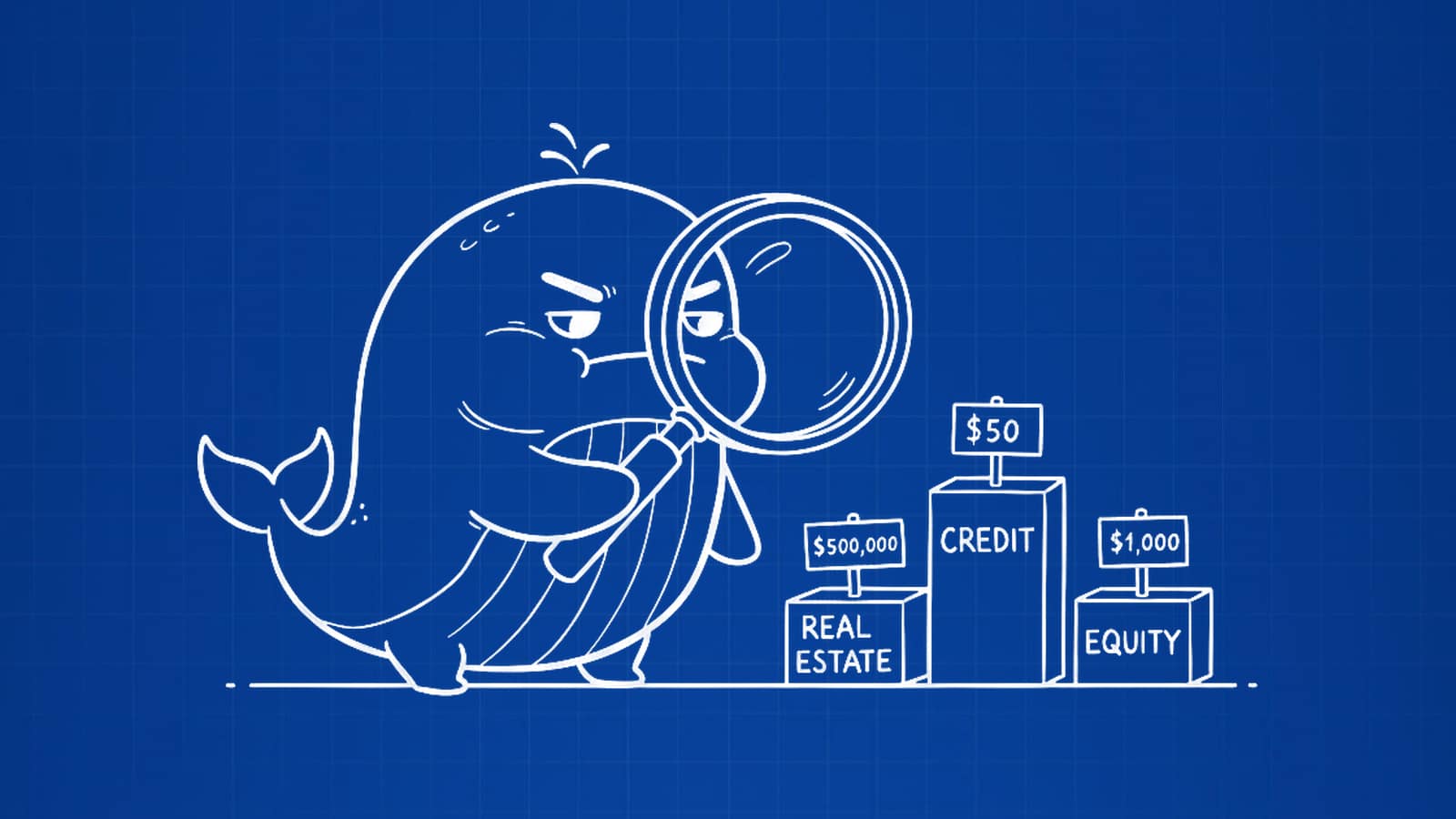
Summary: RWA tokenization isn’t one cost – it’s five different costs based on what you’re tokenizing. Real estate, private credit, equity, art, and commodities each have their own custody setup, auditor, regulator, and price tag. If your agency gave you a flat “RWA MVP” quote without asking what the asset is, they’re guessing. Here’s the real dollar math per asset class, plus what RWA auditors actually check (and where the bill blows up).
Most RWA quotes I’ve seen look like dApp quotes with a new word slapped on top.
An agency that’s done three token launches and rebranded itself as “RWA experienced” will price a real estate platform and a private credit platform the same way. Those are not the same project. Not even close.
Different asset class. Different custodian. Different auditor. Different regulator. Different number.
Getting a flat “RWA MVP for $120K” quote is like a contractor saying “a house, $400K” without asking if it’s a studio or a three-story on the coast.
You’ll pay for the confusion later.
I’m Gus. I run BeAWhale, a blockchain development agency. I’ve watched founders go in with a generic “RWA MVP” budget and come out six months later rebuilding the wrapper because the team quoted real estate and the founder was actually tokenizing private credit.
Let me save you the rework.
The cost by asset class…
These are ranges I see production-ready RWA projects pay. Not prototype numbers. Real builds that ship and hold up in audit.
Real estate. Basic single-property fractional platform: $80K-$140K. Multi-property REIT-style platform with a secondary market: $180K-$350K. The heavy cost sits in custody (usually a qualified custodian or an SPV per property) and the oracle layer for valuation updates. If you’re picking wrapped-SPV per building, plan for recurring legal fees on each one.
Private credit. Basic tokenized credit fund: $120K-$220K. Multi-tranche with waterfall logic and dynamic interest payouts: $220K-$450K. Higher than real estate because the smart contract logic around default scenarios, tranche seniority, and coupon payments is hard to get right. Most “cheap” private credit quotes skip the default logic entirely. That’s where the rebuild comes from.
Equity (private company shares). Basic cap table platform: $100K-$180K. Full platform with corporate actions and secondary transfers: $250K-$500K. The real expense isn’t the contract. It’s the shareholder registry integration and the corporate-actions engine (stock splits, dividends, voting).
Art and collectibles. Fractional art platform: $60K-$120K. Premium platform with authenticity attestation and custodian integration: $120K-$240K. Cheapest asset class because custody is physical and discrete. But the legal structure is where the bill catches you – who owns the physical piece, and what happens on default?
Commodities (gold, oil, precious metals). Basic commodity-backed token: $80K-$160K. Full platform with redemption, vaulting integration, and audit attestations: $180K-$350K. Tech-wise it’s close to a stablecoin. Operationally, vaulting and attestations drive the real cost.
That’s just build cost. You haven’t paid for audit yet.
The RWA audit bill nobody warns you about…
Here’s the part most founders miss. An RWA audit is not one audit.
A smart contract auditor looks at your code. For a pure dApp, that covers about 90% of the risk surface. For RWA, it covers maybe 30%.
The rest of the RWA audit stack breaks out like this.
Off-chain collateral verification. Proof the asset you claim is backing the token actually exists and is pledged. $8K-$30K per audit cycle depending on asset class.
Custodian attestation. Monthly or quarterly proofs of holdings from your custodian. $5K-$20K per year in attestation fees, plus a one-time setup charge.
Oracle integrity check. If you rely on price feeds or ownership updates, someone audits the feed architecture. $5K-$15K.
Legal opinion validity. A law firm reviews that your token actually represents the rights you claim it does – securities law exposure, jurisdictional scope, enforceability. $15K-$75K depending on how many jurisdictions you touch.
Add those up. You’re at $33K-$140K in audit-adjacent cost on top of the smart contract audit (which runs $15K-$50K on its own – see my smart contract audit cost breakdown for the firm-tier math).
If your RWA quote doesn’t itemize these, ask. The gap between “code-only audit” and “full RWA audit stack” is the difference between “we passed” and “the SEC sent us a letter.”
Regulation adds its own layer…
Where you launch changes the bill. Same asset class, different number.
United States. Most RWAs fall under securities law. Reg D, Reg S, or Reg A+ depending on the investor base. Legal filing work: $50K-$180K in year one. A broker-dealer partnership for secondary transfers: $20K-$60K per year.
European Union (MiCA / MiFID II). Security-style RWAs still fall under MiFID II. Utility-adjacent tokens sit under MiCA. Mixed projects pay for both. Legal setup: $40K-$120K. MiCA license filing where needed: $30K-$80K.
Singapore (MAS). Faster timelines, still not cheap. Capital Markets Services license for in-house operators: $25K-$90K. Using a licensed partner is usually cheaper.
Dubai (VARA). Business-friendly but specific to VARA’s RWA guidance. $20K-$60K to get the licensing stack together.
I broke down the full jurisdictional math in my blockchain compliance cost by jurisdiction post a few weeks back. Short version: if you’re multi-jurisdictional from day one, plan for a two-entity structure and budget $60K-$120K on legal for year one alone.
Red flags in RWA quotes…
I’ve reviewed dozens of RWA proposals from other agencies. Same three red flags show up every time.
Red flag 1: one flat price, no asset class asked. If the discovery call never covered “what exactly are you tokenizing,” the quote is generic. Run.
Red flag 2: no auditor named. Not every smart contract auditor has RWA experience. Ask for a named firm with at least two tokenized-RWA audits in their portfolio. If they can’t name one, their cost estimate is fiction.
Red flag 3: custody handled “later.” Custody is the spine of an RWA project. If the agency says “we’ll figure out custody once we’re live,” that’s code for “we’ve never done this.” Custody decisions shape the smart contract architecture. They belong in discovery, not after launch.
What a prepared RWA founder looks like…
Before you talk to a dev team, you should have four things ready.
One: the asset class documented. Real estate? Private credit? Equity? Say the words and back them up with a legal wrapper draft.
Two: your custodian shortlisted. Anchorage, Fireblocks, Copper, BitGo, or a qualified custodian in your jurisdiction. Name it.
Three: your legal opinion scope. Which jurisdictions? Which investor types? How will secondary transfers be handled?
Four: your redemption mechanism. Can holders redeem for the underlying asset? Under what conditions? With what notice?
If all four are locked, your quotes come back tighter and more accurate. My earlier post on the RWA tokenization dev team checklist covers the legal wrapper and custody prep in more depth.
Specialist vs generalist: when to pay the premium…
Honest read.
If you’re tokenizing real estate with a single SPV in one jurisdiction, a generalist blockchain agency with strong security token experience is fine. The lift is manageable.
If you’re tokenizing private credit with multi-tranche waterfall logic, or equity with corporate actions, or anything multi-jurisdictional from day one, hire a specialist. Generalists quote cheaper and burn that savings (and more) in rework. I’ve seen rebuild bills of $40K-$120K when a generalist wrapper got scrapped six months in.
Specialist premium is usually 20-40% over generalist pricing. Worth it above a basic real estate fractional platform.
For the token mechanics (supply, vesting, governance hooks) that sit on top of the RWA layer, my token development cost breakdown covers that side of the bill separately.
The BeAWhale angle…
This is where I tell you how we do it at BeAWhale. Different from most agencies.
On RWA projects, we price by asset class and itemize the audit stack line by line. No flat “RWA MVP” number. If you’re tokenizing private credit, your quote says “private credit, multi-tranche, $X for build, $Y for audit split into code, collateral, custodian, oracle, and legal.” If you’re tokenizing real estate, it looks different.
We won’t take your money if your legal side isn’t ready. Two-week free trial where we pressure-test your legal wrapper, custody plan, and regulatory posture. If anything’s missing, we tell you and you keep your money. If it’s ready, we roll into build with 2 months free support after launch and a 5-year warranty on the code.
“YOU’LL LOVE US, OR YOU KEEP THE MONEY.” That’s not a marketing line. That’s the actual terms.
If you want to pressure-test your RWA plan, grab the 7 agency secrets guide or contact the team and we’ll take a look.
The bottom line…
RWA tokenization cost is not one number. It’s five. Inside each number sits an audit stack, a custody setup, a legal opinion, and a regulator.
If your agency hasn’t itemized any of that, you’re not getting a quote. You’re getting a guess.
Know your asset class. Know your jurisdiction. Name your custodian.
Then, and only then, ask for the number.
