RWA Tokenization Cost by Asset Class: What Real Estate, Private Credit, and Equity Deals Actually Pay (and Where the Audit Bill Hits)
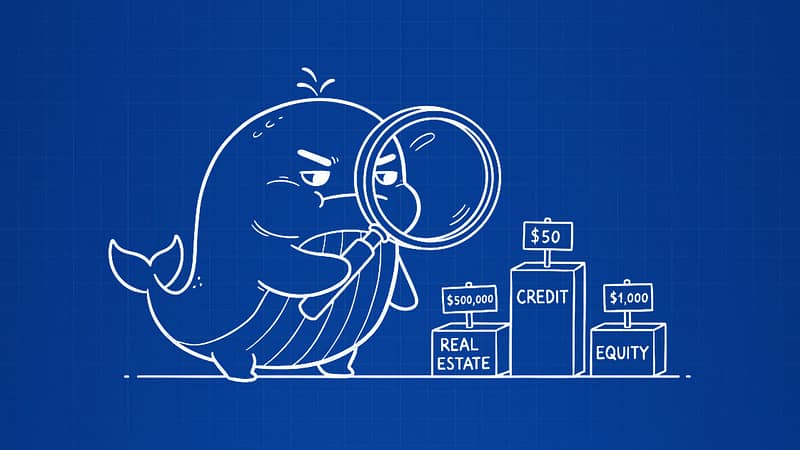
RWA tokenization audit: $33K-$140K stack on top of $15K-$50K smart contract audit. Build $60K-$500K by asset class. Real numbers, no padding.
Web3 Startup Mistakes That Cost $50K+ (From Inside the Agency That Fixes Them)

The 7 Web3 startup mistakes that quietly cost founders $50K+ each – and how an agency insider would spot them before you write a check.
How to Hire a Blockchain Developer in 2026: The Founder’s Playbook (Without Getting Burned)

How to hire a blockchain developer in 2026 without getting burned. Real costs, four questions to ask first, five red flags that kill bad hires, and when an agency beats a full-time dev.
Account Abstraction Cost: What ERC-4337 Actually Costs to Build Into Your dApp (and When It’s Worth It)

Summary: Account abstraction makes your dApp feel like a regular app – no seed phrases, no gas fees in the user’s face, social logins that actually work. ERC-4337 is the standard. Adding it to your dApp costs $15K-$50K depending on scope. This post breaks down what you’re paying for, what it changes for your users, […]
The Blockchain Development Stack in 2026: What Your Agency Should Be Using (and What’s a Red Flag)

Most founders can’t tell a good blockchain tech stack from a bad one. Here’s a plain-English framework for reading an agency proposal in 10 minutes – modern layers, red flags, and what’s still fine.
Blockchain Compliance Cost: What Founders Actually Pay for Regulatory Readiness (and Where the Legal Bill Gets Padded)

Break down the real cost of blockchain compliance by jurisdiction and project type. See where legal bills get padded and what a smart 2026 launch actually spends.
How to Reduce Blockchain Development Cost (Without Wrecking Your Product)

7 real cost levers that save 25-40% on blockchain builds – with dollar math on each one. Plus 3 false savings that quietly double your budget.
Blockchain Proof of Concept vs MVP: What to Build First (and What Each Actually Costs)
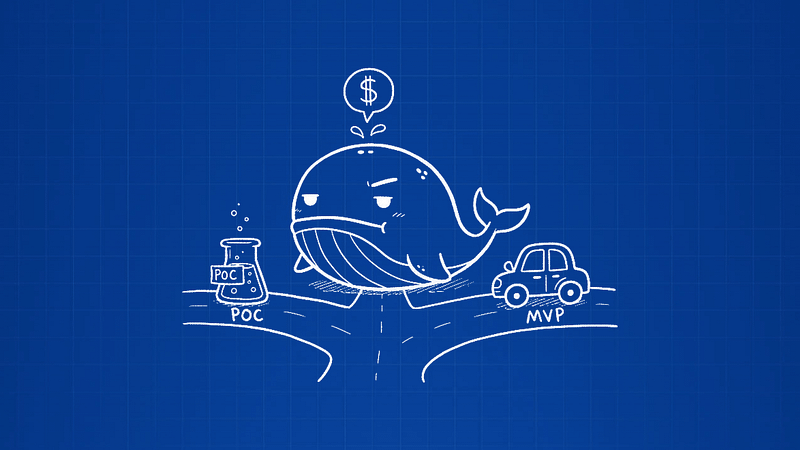
Blockchain POC vs MVP: $5K-$25K POC vs $20K-$120K MVP. When to do which, red flags in padded POC quotes, and how to use it as an agency test.
How Much Does Blockchain Development Cost in 2026? The Real Numbers by Project Type
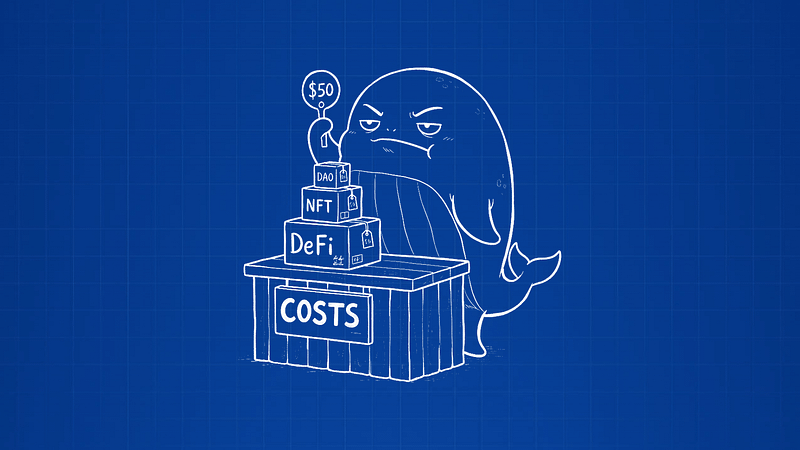
Blockchain development cost 2026: $5K tokens, $20K MVPs, $60K dApps, $150K+ enterprise, $550K+ games. Real ranges, hidden costs, no padding.
Crypto Wallet Development Cost: What You’re Actually Paying For (and Where the “MetaMask Clone” Quotes Hide the Markup)

Your crypto wallet costs $60K-$350K depending on type. Here’s the real layer-by-layer breakdown from inside the agency – core engine, frontend, backend, security – with the math on where quotes get padded.
DAO Development Cost: What You’re Actually Paying For (and Where the Governance Hype Hides the Markup)

Most DAO quotes hide three layers behind the word governance. Here is the real cost range ($45K to $180K), what padding looks like, and how to tell a Snapshot page from a real DAO.
Cross-Chain Bridge Development Cost: What You’re Actually Paying For (and Why Most Bridge Quotes Are Half a Number)
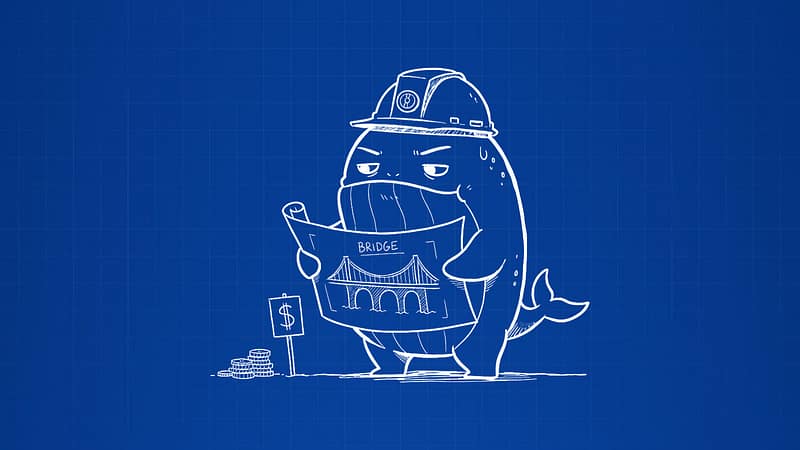
Cross-chain bridge development cost: $50K-$500K. Cheap quotes skip the audit, relayer infra, or liability. Here’s the line-by-line from inside an agency.
Blockchain Game Development Cost: What You’re Actually Paying For (and Where GameFi Quotes Hide the Markup)

Blockchain game development cost breakdown from inside the agency. Real numbers by GameFi type, the 4 cost layers, padding exposé, and a clean quote template.
NFT Marketplace Development Cost: What You’re Actually Paying For (and What’s Just OpenSea with a New Logo)

The short version: A custom NFT marketplace costs $45K-$250K depending on what you’re actually building. Most agencies quote $150K+ for what amounts to a forked OpenSea template with your logo on it. The smart contract layer runs $8K-$40K, the frontend and marketplace logic eat another $15K-$80K, and storage plus infrastructure add $5K-$20K. The rest? That’s […]
DeFi Development Cost: What You’re Actually Paying For (and What’s Just DeFi Theater)

You’re not paying for “DeFi development.” You’re paying for four different things pretending to be one. Every DeFi cost breakdown I’ve seen online does the same thing. They give you a range — “$50K to $500K” — and call it a day. That’s not a breakdown. That’s a shrug with extra steps. So let me […]
Blockchain Developer Salary in 2026: What the Job Boards Won’t Tell You About the Real Cost

Blockchain developer salary 2026: $180K-$280K base + 1.7-1.9x loaded. The real cost of in-house vs agency vs contractor, from inside an agency.
Web3 Post-Launch Checklist: What Nobody Tells You After Deploy Day

The short version: Your blockchain project just went live. Now what? Most founders have no plan for what happens after deployment. This is the week-by-week checklist with real costs – from monitoring setup ($200-800/mo) to your first re-audit ($15K-40K) to steady-state operations ($6K-8K/mo median). From an agency that builds these things and watches founders scramble. […]
Smart Contract Development Cost: What You’re Actually Paying For (and Where Agencies Hide the Markup)

Smart contract development cost: $45K-$60K. Code is 25-35%. Testing, audit, deployment, gas eat the rest. 5-layer breakdown from inside an agency.
Blockchain Project Management: What Founders Get Wrong After Signing the Contract

Most founders nail the agency selection and then completely wing the build. The Ghost disappears for a month. The Helicopter micromanages every commit. Both kill projects. Here’s the 2-hour-per-week framework that actually works – from someone who’s managed dozens of blockchain builds.
Outsourcing Blockchain Development: What Actually Goes Wrong (and How to Not Be That Founder)

Most founders outsource blockchain development because they have to. But 60%+ of outsourced projects go over budget because founders skip the boring stuff: clear scope documents, milestone-based payments, and code ownership clauses. Here’s the real playbook.
Token Development Cost: What You’re Actually Paying For (and What’s Padding the Quote)

Token development cost in 2026: $8K-$80K by token type. What’s in a fair quote, what’s padding, and when you don’t need a custom token at all.
Blockchain Security on a Startup Budget: What Actually Matters and What’s Overkill

The short version: Most Web3 founders either spend $0 on security and get hacked, or blow $200K on enterprise-grade audits they don’t need yet. The right number for an MVP is somewhere between $8K and $25K – and where you spend it matters way more than how much. The $1.5 Billion Wake-Up Call… February 2025. […]
What Your Blockchain Project Actually Costs After Launch Day

The short version: Most blockchain projects spend 15-25% of their initial build cost every single year on maintenance – and that’s if nothing goes wrong. A $100K build turns into $15K-$25K per year in hosting, monitoring, security patches, and chain upgrades. The agencies that built your project know this. Most of them just don’t tell […]
Blockchain UX Design: Why Most dApps Lose Users Before They Even Start

Most dApps lose 60% of users at wallet connection. The problem isn’t your smart contract – it’s your UX. Here’s what bad blockchain design actually costs you.
dApp Development Cost: The Real Numbers From Inside the Agency

The short version: A basic dApp costs $30K-$60K. A mid-complexity one runs $60K-$150K. Enterprise goes $200K+. But those numbers are useless without context – because the real cost depends on four decisions you’ll make before a single line of code gets written. Google “dApp development cost” and you’ll get seventeen articles that all say the […]
How to Write a Blockchain Development RFP (That Gets You Accurate Quotes)

Most blockchain RFPs are so vague that agencies pad quotes by 40-60%. Here’s the exact structure that gets you accurate pricing, faster turnaround, and agencies that actually want to work with you.
Blockchain Agency vs Freelancer: The Real Math Behind Both Options

Freelancers cost less per hour but more per outcome. Here’s the actual math on agency vs freelancer for your blockchain project – and when each option wins.
Blockchain Development Timeline: The Honest Math Nobody Shares With You

A typical blockchain MVP takes 3-5 months to build, not the 4-6 weeks some agencies quote. Here’s the real phase-by-phase breakdown with actual numbers.
Smart Contract Audit Cost: The Real Numbers Nobody Breaks Down for You

Smart contract audit cost in 2026: $5K-$300K by tier and code size. What’s a fair quote, what’s overpriced, and which firms are worth their fee.
How to Vet a Blockchain Development Agency (Without Getting Burned)

How to vet a blockchain development agency before signing: spot the bait-and-switch, verify audits, test the portfolio. From inside the agency.
RWA Tokenization: What Founders Need Before They Hire a Dev Team

RWA tokenization development team checklist: 4 things founders need before hiring. Skip one and $60K builds become $120K. Legal, compliance, custody, KYC.
Why Blockchain Dev Hiring Collapsed in 2026 (And What Smart Founders Do Instead)

Blockchain developer hiring in 2026: $200K+ salaries, 75% fewer GitHub commits. Here’s what smart founders are doing instead of hiring in-house.
The Web3 Founder’s MVP Checklist (Before You Write a Single Line of Code)

Web3 MVP checklist for founders: 6 steps that save $20K-$50K before your first line of code. Market fit, token design, contract scope, launch plan.
The Blockchain MVP Math Nobody Shows You

Blockchain MVP cost in 2026: quoted $15K-$30K, real production number is $40K-$80K+. Here’s the line-by-line of what’s hidden in the gap.
Web3 Agency Hourly Rates: What You’re Actually Paying For

Web3 agency hourly rates 2026: $25-$250/hr by tier. What’s a red flag, what’s fair, and what the $180+ range actually buys. From inside an agency.