Most Web3 startups don’t die from bad ideas. They die from 7 predictable founder mistakes that each cost between $20K and $100K. I’ve watched every one of them from the inside. Here’s what they actually cost, and how to not be that founder.
Let me be real with you…
I’ve been running BeAWhale since 2020. We build Web3 products for a living. And the same mistakes show up again and again.
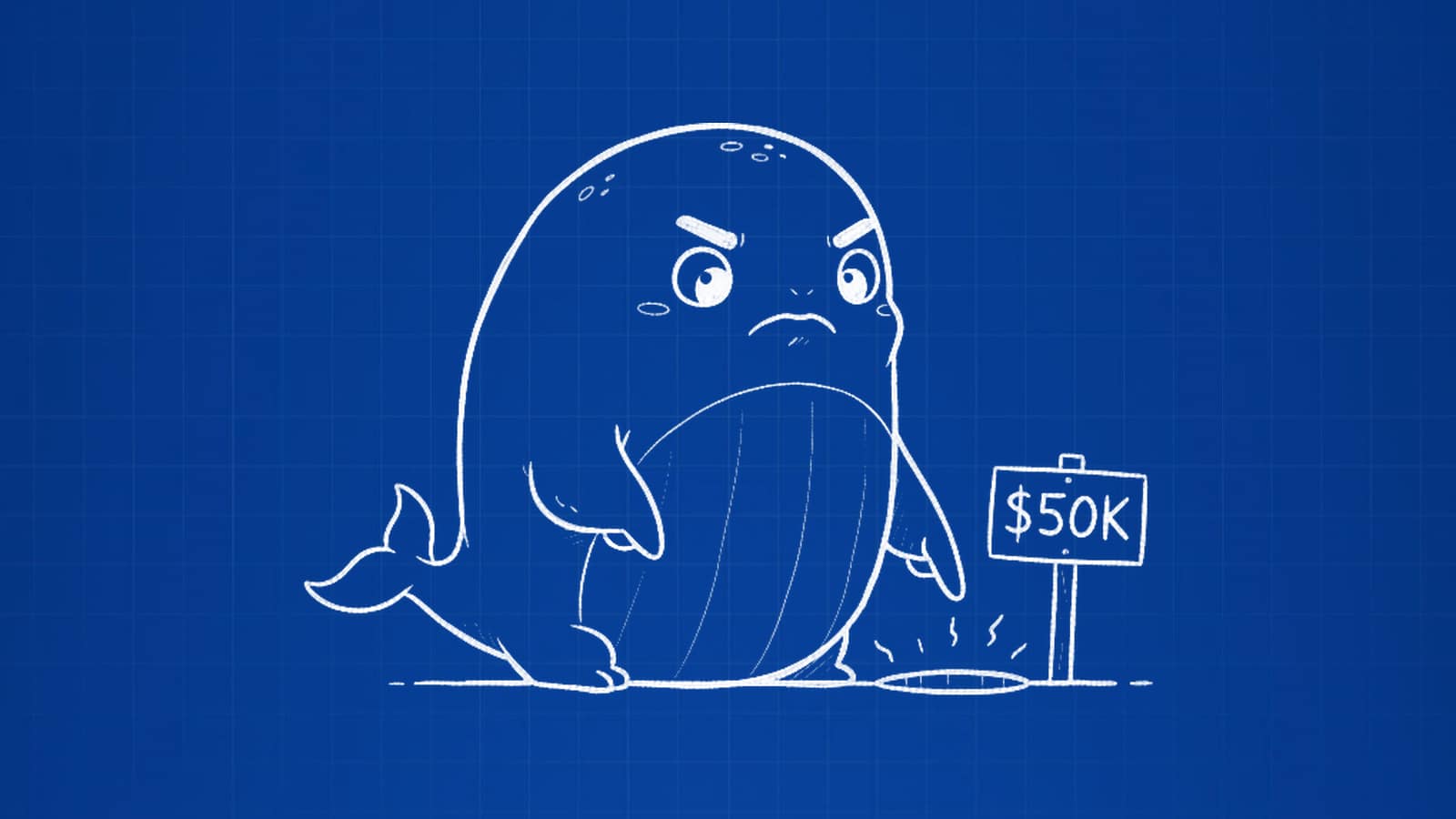
Not rare mistakes. Not edge cases. The exact same $50K potholes, hit by the exact same kind of founder, in the exact same order.
Some of these founders come to us for rescue jobs. Some come to us before they’ve made the mistake. The gap between those two groups is usually a six-figure check.
So here’s the list. Seven mistakes. Real numbers. No hedging.
Mistake #1: Hiring builders before you validate anything
This one’s expensive…
A founder raises $500K on a pitch deck. Week one, they hire an agency for $120K to build the full product. Week twelve, the product ships. Week fifteen, they realize nobody actually wants it.
$120K. Gone.
They didn’t need a full build. They needed a proof of concept or a small MVP first. A POC costs $5K to $25K and tells you if the idea even works. An MVP costs $20K to $120K and ships real product to real users.
Skipping the POC when you should’ve done one is the single most expensive mistake I see.
Cost to the founder: $30K to $100K depending on how deep they went before noticing.
How to not be that founder: before you write a builder check, answer one question in writing – “what behavior am I testing, and how will I know if I’m right?” If you can’t answer it, you’re not ready to build. You’re ready to interview users.
Mistake #2: Skipping the smart contract audit
Now here’s where it gets scary…
Every founder who skips an audit has the same excuse. “We’ll do it later, after launch, when we have more money.”
No you won’t. You’ll do it after someone drains the contract.
I watched a $40K project lose $2M because the founder shipped without an audit. The math wasn’t hard. A proper smart contract audit costs $5K for a simple token and $80K for something complex. The stolen funds were 50x the cost of the audit they didn’t pay for.
It’s like buying a car and skipping the brakes. Sure, it’s cheaper at first. Until it isn’t.
Cost to the founder: potentially everything. Literally. Some exploited projects have zero recovery.
How to not be that founder: budget the audit before you budget the build. If the full project math doesn’t work with the audit included, the project doesn’t work. That’s the answer.
Mistake #3: Picking the wrong chain for the wrong reasons
Something doesn’t check out here…
Founder picks Ethereum because “that’s where the serious people are.” Product is a consumer game with millions of small transactions. Gas fees eat the user experience. Six months later, they’re rebuilding on a different chain.
Or the opposite. Founder picks a brand-new L2 because the ecosystem team promised grants and traffic. The grants don’t materialize. The traffic is 11 weekly actives. They rebuild on Ethereum.
I’ve seen this rebuild cost $50K to $120K. Not because the code was bad, but because nobody stopped and asked “does this chain actually match the user behavior we’re trying to enable?”
Cost to the founder: $50K to $120K and 4 to 6 lost months.
How to not be that founder: pick the chain that matches the behavior, not the narrative. High-frequency game = cheap chain with fast finality. Store of value = Ethereum or Bitcoin. Compliance-heavy RWA = chains with real enterprise tooling. Match the use case.
Mistake #4: Paying for custom code when open-source already ships it
This one hurts to watch…
An agency quotes $40K for a “custom AMM engine.” There’s no reason the founder needs a custom AMM. Uniswap v4 hooks do 90% of what they want. The remaining 10% is a config file.
But the quote says “custom” because “custom” sells better than “config.”
Same story with wallets. Same story with governance contracts. Same story with NFT standards. Most Web3 infrastructure is solved. The value your agency adds isn’t in rewriting it – it’s in knowing which open-source pieces to use and how to wire them together.
An honest agency will cut costs by reusing proven components. A toxic one will pitch “custom” for everything because it lets them bill more hours.
Cost to the founder: $20K to $40K per padded line item.
How to not be that founder: for every “custom” line in a quote, ask one question. “What open-source alternative exists, and why aren’t we using it?” If the answer is a blank stare, you’ve got your answer.
Mistake #5: No post-launch budget
Launch day isn’t the finish line. Launch day is when the expensive part starts.
I’ve seen founders spend their entire war chest on the build and have zero runway left for the 6 months after launch. Then the first bug lands. Then the first chain upgrade breaks something. Then marketing needs a new landing page. Then a security firm flags a dependency CVE.
Nothing to pay for any of it with.
The real math: post-launch operations run $3K to $15K per month for a typical Web3 project. That’s monitoring, hotfixes, infrastructure, light feature work, and community ops. Plus a one-time security review around month three that’s another $5K to $15K.
If your launch budget is $120K, you need at least $40K to $60K reserved for the post-launch year. Not a wish. A plan.
Cost to the founder: the whole product. Projects that can’t afford post-launch maintenance die between month 2 and month 4. Every time.
How to not be that founder: reserve 20% to 30% of your build budget for post-launch ops before you cut the first check. Write it down. Treat it as already spent.
Mistake #6: Hiring the cheapest agency and paying twice
I’ll be fair. Price-shopping is normal. I do it too.
But Web3 isn’t the place for it. I’ve seen founders pick a $15K quote over a $60K quote because “they said they can do it.” Six months later, the code is a mess, nothing’s audited, and the whole project needs a rebuild.
The rescue quote? Usually more than the original “expensive” one they didn’t take. Because now we’re cleaning up bad decisions, not starting fresh.
This is why I wrote the guide about toxic agency practices – because the cheapest quote almost always hides the trap.
It’s like hiring the cheapest surgeon. If you knew how to tell a good surgeon from a bad one, you wouldn’t be hiring one. So the price race becomes a trust race you can’t win.
Cost to the founder: $40K to $100K rebuild plus 4 to 6 wasted months.
How to not be that founder: get 3 quotes. Throw out the cheapest and the most expensive. Actually vet the middle one properly. And ask for a risk-reversal offer – at BeAWhale we run a 2-week free trial because I believe you should love the work before you pay for it.
Mistake #7: Letting the agency drive the roadmap
Here’s the last one…
Founder signs a contract and checks out. Agency ships what the agency feels like shipping. Three months in, the founder finally looks at the product and realizes it’s nothing like what they agreed to.
Scope drift goes both ways. Some agencies pad. Some founders abdicate. The result is the same – a product that cost a lot and does the wrong thing.
The fix isn’t micromanaging. The fix is a weekly rhythm. 30 minutes. Three questions – what shipped, what’s next, what’s blocked. That’s it. Any agency that resists that rhythm is telling you they don’t want to be held accountable.
Cost to the founder: $20K to $50K of wasted development on features that didn’t matter.
How to not be that founder: install the rhythm before the contract starts. Not after.
Closing…
Seven mistakes. Each one costs money. Each one is preventable in about 30 minutes of thinking.
At BeAWhale we’ve spent six years cleaning up projects that hit these potholes, and building fresh projects that don’t. If you want to see the full agency playbook – scope games, exit fees, the bait-and-switch, and every trap that makes founders lose $50K overnight – grab the free guide here.
Or if you’re ready to build with people who eat their own cooking: 2-week free trial, 2 months free support, 5-year code warranty. You’ll love us, or you keep the money. Start here.
Don’t be that founder.
